
Clean air, safe drinking water, and an environment free of harmful substances are essential for every human being. If one of these elements is missing, it affects a person's health, safety, living situation, and the feeling of being able to influence their own living environment. A well-protected living environment is therefore not only a prerequisite for a dignified existence, but also the basis for realizing other human rights. However, for the inhabitants of the Caribbean Netherlands, the right to a clean, healthy, and sustainable living environment is under pressure. This is due to bottlenecks in waste processing, the deterioration of nature and biodiversity, coastal erosion, and pollution. Challenges in the areas of regulation, licensing, supervision, and enforcement also play a role. Furthermore, the government does not always involve residents in decisions that directly affect their living environment. This context highlights that environmental protection on the islands is not merely an administrative task, but also a human rights issue.
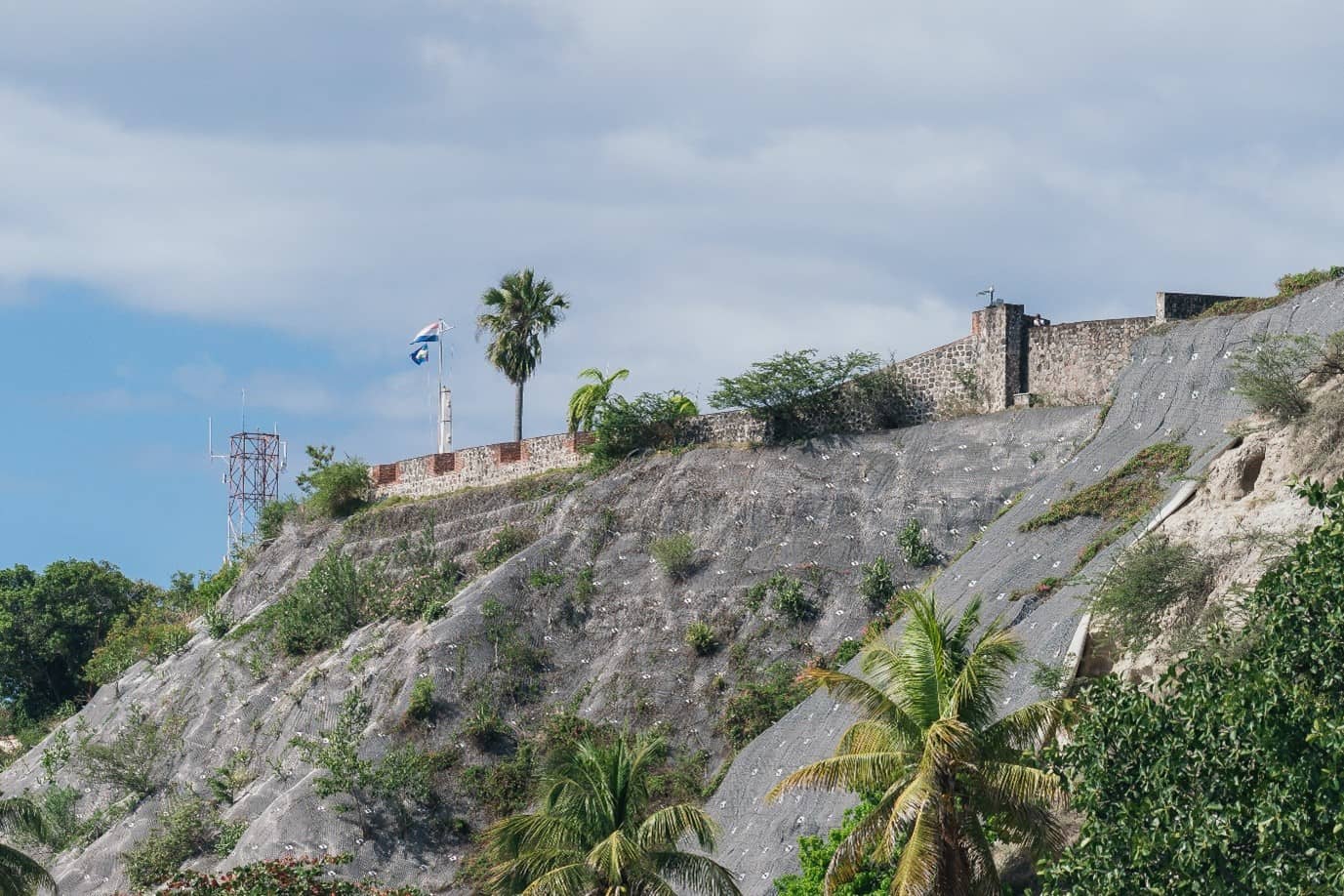
Image: © Roëlton Thodé / Roëlton Thodé
Visible coastal erosion on Sint Eustatius.
In this article, the Netherlands Institute for Human Rights explores how the right to a clean, healthy, and sustainable environment is protected in the Caribbean Netherlands. We also examine where it falls short and what responsibilities the local government and the Dutch government bear. The waste management issues on Bonaire are used as an illustrative example. This case illustrates how insufficient consideration of human rights in policy and implementation can jeopardize the right to a clean, healthy, and sustainable environment. We also look at the unique context of the islands: their ecological vulnerability, small scale, and special position within the Kingdom make effective protection both necessary and complex. The article builds on the annual report about human rights in The Netherlands from 2023: the right to a clean, healthy, and sustainable environment (part 1) .
1. Why this is a human rights issue
Protecting the environment is closely linked to protecting human rights. If people are exposed to air pollution, dangerous substances, or disrupted living conditions for a long time, and the government doesn't protect them from the harmful effects of environmental pollution, human rights can be at stake. Examples are the right to life (Article 2 ECHR), the right to private, family, and home life (Article 8 ECHR), the right to health (Article 12 ICESCR), and the right to an adequate standard of living (Article 11 ICESCR). In the legal framework published by the Institute in 2024, we explained how environmental pollution and damage to nature do not only have ecological but also human rights consequences. Both national courts and international human rights courts have recognized that states have positive obligations to protect their citizens from serious environmental damage if it affects their rights. In April 2024, the European Court of Human Rights ruled in the KlimaSeniorinnen case against Switzerland that inadequate climate policy may, under certain circumstances, constitute a violation of Article 8 of the ECHR. In July 2025, the International Court of Justice also confirmed in an advisory opinion that the right to a clean, healthy, and sustainable environment is an independent human right under international law. According to the Court, a healthy environment is a necessary condition for the exercise of other human rights. In doing so, the Court emphasized that states, including the Netherlands, cannot fulfill their human rights obligations without also actively protecting the environment. Even if that right has not yet been enshrined in law.
Dutch court rulings also show importance human rights
There are also court rulings within the Kingdom of the Netherlands confirming the human rights dimension of environmental protection. A striking example within the Caribbean part of the Kingdom is the ruling on the Isla refinery on Curaçao. In 2021, the Joint Court of Justice of Aruba, Curaçao, Sint Maarten, Bonaire, Sint Eustatius, and Saba ruled that the government had violated the right to private and family life by failing to adequately monitor air quality. The court found that too little attention had been paid to the potential health risks and other adverse effects of the pollution. It also found that the government had not sufficiently informed citizens about the risks. In addition, the government had not made clear what measures had been taken to actually reduce the air pollution. The Curaçao government had thus violated its duty of care under Article 8 of the ECHR. Additionally, on January 11, 2024, eight residents of Bonaire, together with Greenpeace Netherlands, started legal proceedings against the Dutch State. They claim that their human rights are being violated because the State is not doing enough to protect the residents of Bonaire from the effects of climate change. The case is legally groundbreaking within the Kingdom perspective, as it is the first time that the residents of the Caribbean Netherlands are demanding climate protection on the basis of human rights. In doing so, they are also emphasizing equal protection compared to residents in the European Netherlands. The substantive hearing of this case will follow in October 2025. In this context, environmental protection in the Caribbean Netherlands should not be viewed solely as climate and environmental policy, but also as a matter of human rights. The ruling of the International Court of Justice confirms that environmental and climate policy in the Caribbean Netherlands should contribute to the realization of human rights. This places a central responsibility on both the Dutch government and local authorities. This obligation requires proactive policy, effective enforcement, access to information, and legal protection in both the European and Caribbean Netherlands
2. The situation on Bonaire: waste processing under pressure
The situation surrounding the landfill site at Lagun Bonaire, managed by waste processor Selibon, shows what happens when environmental policy falls short and human rights are not adequately safeguarded. For years, hazardous waste has been stored and processed here without adequate protection for the people and the environment. For years, the landfill did not have a valid permit, while asbestos, medical waste, and other hazardous materials were present on the site. Regular spontaneous combustion led to heavy smoke, odor nuisance, and health complaints among local residents. Residents of the surrounding Lagun neighborhood have been expressing concerns about smoke, odor nuisance, and potential health risks for years. They report complaints such as headaches and respiratory problems. Whether these health complaints can be directly attributed to the situation at Selibon has not yet been investigated. However, various documents, including a recent publication following a “Woo”-request (Open Government Act; request to disclose government information), show that the landfill site has posed a health risk since 2013. The Human Environment and Transport Inspectorate (ILT) repeatedly warned of the seriousness of the situation. Reports, letters from social organizations such as Pro Lagun, and official communications from the State Representative left no room for doubt: this is a structural and serious degradation of the environment, with potentially harmful consequences for public health. In a 2023 research report, researchers warned of the risks to public health. They spoke of ‘chronic exposure to emissions from waste incineration and the hours-long after-effect of incompletely burned fumes’. Despite this, no structural intervention was taken for a long time. It was not until November 2024 that acting State Representative Jan Helmond formally replaced the Executive Council due to neglect of duty. In February 2025, the court confirmed the seriousness of the situation and the justification for the measure, but also ruled that the Executive Council should have been given more time to put its affairs in order. The court partly upheld the State Representative's actions, but also criticized him for not allowing the local government a final opportunity to resolve the issue. Helmond accepted this ruling and transferred responsibility for the measures to the Executive Council, which is now tasked with implementing them and ensuring their structural integration into local policy.
Focus on structural causes from a human rights perspective
The measures implemented by Helmond have somewhat alleviated the acute risks. These included securing containers with asbestos-containing waste, improving the fencing and security of the site, and the temporary storage and removal of biomedical waste. However, the underlying structural issues remain unresolved. These include the absence of a robust licensing system, limited enforcement capacity, and the lack of meaningful public participation in decision-making. Local residents have now also taken legal action. Stichting Pro Lagun, an organization representing local residents, has filed an appeal. In it, the organization argues that the government is violating its duty of care by failing to take sufficient action against the ongoing environmental damage and health risks at the landfill site. This step shows that residents feel compelled to stand up for their right to a safe living environment. It also underscores the vulnerable position of citizens when the government fails to provide adequate supervision, enforcement, and protection. From a human rights perspective, this situation affects multiple rights. The prolonged absence of permits, the failure to enforce regulations in a timely manner, and the lack of transparency and participation affect the right to health (Article 12 IVESCR), the right to respect for private and family life (Article 8 ECHR), and the right to access to an effective remedy (Article 13 ECHR). Furthermore, this situation cannot be viewed in isolation from the structural lack of supervision and the unequal position of the islands within the Kingdom. The Selibon case shows what happens when human rights do not guide environmental policy: social unrest, legal conflicts, deteriorating trust in government, and a direct threat to public health.
3. Three islands: unique context, equal rights
While Bonaire presents the most pressing example, the living environments on Saba and Sint Eustatius are under strain as well. The three islands differ in size, population, culture, and nature. Yet all three face similar challenges in protecting their fragile environments. According to the report State of Nature in the Caribbean Netherlands 2024, the state of nature on all three islands is in moderate to poor condition. Progress in nature and environmental management remains limited.
On Sint Eustatius, the uncontrolled dumping of household and construction waste is leading to soil and water pollution. Waste is often dumped directly into the environment, posing serious risks to public health and marine environment. Overgrazing by stray goats also contributes to accelerated soil erosion and damage to nature reserves. The nature conservation group STENAPA warns of severe funding shortages, as no structural financial support is provided from the Netherlands. While nature organizations in provinces receive subsidies, nature organizations in the Caribbean Netherlands fall between two stools.
Saba also struggles with overgrazing by goats, bottlenecks in waste processing, and limited capacity for nature conservation. Local implementation capacity is limited, as is the availability of specialist knowledge. This makes it difficult to protect vulnerable nature. Both Saba and Sint Eustatius lie in the hurricane belt, where tropical storms and hurricanes regularly inflict significant damage to infrastructure and nature. This puts further pressure on nature's capacity to recover.
Finally, as a low-lying island, Bonaire is particularly vulnerable to the effects of climate change, including sea level rise, salinization of agricultural land, and damage to coral reefs. This intensifies existing environmental challenges, such as the overburdening of ecosystems due to coastal development, tourism, and pollution. In addition, there is nuisance caused by sargassum (floating seaweed) and structural bottlenecks in waste processing, including the aforementioned problems at the landfill site at Lagun.
Shared environmental issues on Bonaire, Sint Eustatius and Saba
A shared concern on all three islands is the deterioration of coral reefs. These reefs provide natural coastal protection, are essential for fishing, and are an important source of income through tourism. Their deterioration – due to climate change, water pollution, coral diseases, and overfishing, among other factors – therefore affects not only biodiversity, but also livelihoods, food security, and cultural heritage.
Policy documents, legislative evaluations, and signals from local organizations show that the implementation of environmental policy on the islands is often inadequate in practice. Progress remains limited due to structural bottlenecks such as insufficient funding, weak enforcement, and a lack of public participation. These challenges are exacerbated by the administrative reality: local administrators often hold multiple portfolios, have limited support, and rarely have specialized environmental knowledge. This makes it difficult to pursue sustainable, consistent policies.
What the islands have in common is that the legal and administrative infrastructure for environmental protection is less robust than in the European Netherlands. At the same time, this observation requires nuance. The relationship between the European Netherlands and the Caribbean Netherlands is historically unequal and politically sensitive. This context calls for care, mutual understanding, and transparent decision-making. Although environmental issues vary locally, the consequences repeatedly affect the same human rights: the right to health, to life, to an adequate standard of living, and to participation in one's own living environment. These rights apply to all inhabitants of the Kingdom, but in practice, their protection appears to be unevenly distributed
4. Responsibilities of the Dutch government and local authorities
Not the Netherlands alone, but the whole Kingdom of the Netherlands is a party to most international treaties. As part of the country the Netherlands since 2010, the Caribbean Netherlands fall under the direct responsibility for implementing those treaties. "At the time, the government chose not to immediately implement all Dutch legislation. This legislative restraint has led to legislation in the Caribbean Netherlands often being outdated and multiple human rights treaties not yet being implemented. In 2021, the government adopted the principle of comply or explain. Under this principle, legislation in the Caribbean Netherlands should generally be the same as in the European Netherlands, unless customization is necessary due to the unique position and characteristics of the islands. In that case, the government must explain why the deviation is justified and what alternative protection it offers.
Responsibility for upholding human rights in the Caribbean Netherlands lies with both the island executive councils and the Dutch government. Under international law, rights must be protected equally throughout the entire territory of the Netherlands. If there is insufficient capacity, knowledge, or resources at the local level, the Dutch government has a duty to provide support. The Institute argues that a ‘comply or explain’ approach is essential in this regard. If the Dutch government does not extend standards or obligations to the Caribbean Netherlands, it should explain why this is not happening and what alternative protection is being offered. Such justifications are frequently lacking or insufficient
5. What does the Institute do?
The Netherlands Institute for Human Rights is the human rights supervisory body for the whole of the Netherlands, including the Caribbean Netherlands. The autonomous countries of Aruba, Curaçao, and Sint Maarten fall outside this mandate. The Netherlands Institute for Human Rights continues to monitor and raise awareness of human rights issues in the Caribbean Netherlands. In its Strategy and Multi-Year Plan 2025-2027, the Institute has set itself the goal of contributing to reducing legal inequality between residents of the European and Caribbean Netherlands. In this context:
- the Institute holds discussions with relevant ministries, inspectorates, administrative bodies, and other organizations;
- the Institute continues to report signals and bottlenecks to international supervisory authorities;
- it contributes to knowledge building and awareness of the situation in the Caribbean Netherlands;
- and provides solicited and unsolicited advice on policy development, legislation, and human rights impacts on the islands
6. Conclusion
The situation in the Caribbean Netherlands makes it clear that the right to a clean, healthy, and sustainable environment is far from guaranteed. The waste problem on Bonaire and the broader environmental issues on all three islands demonstrate the need for action. These environmental issues are deeply connected to administrative decisions, socioeconomic challenges, and the historically unequal relationship between the European Netherlands and the Caribbean Netherlands. In practice, this regularly leads to unequal protection of human rights.
The recognition of the right to a clean, healthy, and sustainable environment by the International Court of Justice has once again confirmed that states, including the Netherlands, have a duty to safeguard this right and the human rights associated with it. This is particularly important for residents of small and vulnerable areas such as the Caribbean Netherlands.
In the legal framework published by the Netherlands Institute for Human Rights in 2023, we already emphasized that the protection of the right to a clean, healthy, and sustainable environment on the islands must be strengthened from a human rights perspective. This requires commitment from both local authorities and the Dutch government. Only by recognizing, guaranteeing, and equally applying the right to a healthy environment can the human rights of all residents of the Kingdom be effectively safeguarded. The Institute therefore calls for a structural and human rights-based approach to environmental policy on the islands.